Nursing Playbook / A working session
Find the work behind a remote nursing title.
Compare three fictional postings, then screen a real role for work location, experience, credentials, travel and schedule.
Before rewriting your resume, screen the role
A remote label answers only one part of the decision. First establish what work the employer needs, where you may work, and what experience it requires. This session helps experienced nurses decide which posting deserves a closer look. It does not determine licensure eligibility or predict an offer.
Use a current employer posting rather than a reposted summary. Record its URL, requisition number and the date you checked it. When a requirement is missing, write “not stated” and identify a question; do not convert silence into permission.
A worked example: three attractive titles
Sam is a fictional RN with four years of inpatient experience. Sam has coordinated discharge tasks with a multidisciplinary team, but has not held a case-manager or utilization-review position. Sam wants home-based work and cannot travel routinely. These invented postings illustrate a screening method; they are not vacancies.
On a narrow screen, scroll the table sideways to read each column.
| What to establish | Role A: care coordination | Role B: clinical review | Role C: field case management |
|---|---|---|---|
| Work described | Telephone follow-up and coordination | Review requests against a defined process | Home visits and documentation |
| Location | Home-based in a stated group of states | Remote; permitted work locations unstated | Home office with weekly local travel |
| Required experience | Clinical experience; case-management experience preferred | Prior utilization-review experience required | Clinical experience and reliable local travel |
| Sam's evidence | Inpatient coordination examples; no formal case-manager role | No utilization-review experience | Relevant clinical experience; travel conflicts with needs |
| Next action | Confirm location and remaining requirements | Record the experience gap | Set aside for this search because travel does not fit |
Sam has not “qualified” for Role A. It is simply the next posting worth investigating. A preferred criterion differs from a required one, but all other requirements still need review. Role B is not made suitable by changing Sam's job title on a resume. Role C is not fully home-based just because some documentation happens at home.
Use five checks on your own posting
- Work: Describe the daily responsibility in one sentence. Separate care coordination, telephone assessment, review work and other activities instead of treating them as interchangeable.
- Location and attendance: Find permitted work states, travel, onsite training, office attendance and any time-zone expectations. Distinguish where the job is advertised from where the employee may reside and work.
- Credentials: Record the employer's exact requirements and when they must be met. Verify unclear licensure language with the employer and the relevant licensing authority; this worksheet cannot interpret it for you.
- Experience: Separate required from preferred criteria. Beside each, record a truthful example or a gap. Do not assume years at bedside substitute for a named specialist requirement.
- Working pattern: Check hours, weekends, availability expectations and equipment information. Ask about omitted terms before relying on a particular arrangement.
Translate the evidence without renaming it
Sam's first draft says, “Experienced remote case manager.” That claims a job Sam has not held. A more faithful starting point is: “Inpatient RN with experience coordinating discharge tasks with the multidisciplinary team.” Sam should then add a specific, supportable example from their own work. This sentence is a fictional illustration, not a claim you should copy.
Keep patient names, dates of care and identifying case details out of application notes. Describe your contribution, the collaboration and what you can substantiate without including patient information.
Ask a question that resolves the gap
For Role A, Sam drafts: “For this requisition, could you confirm the permitted employee work locations and whether onboarding requires onsite attendance?” A second question can address how the employer assesses the stated preferred experience. Neither question asks the recruiter to guarantee an interview.
Choose one next action: prepare an application after checking the requirements; ask about an unresolved fact; investigate a specific experience gap; or set the posting aside. These are your planning decisions, not an automated eligibility score.
Why these checks matter
Employer requirements vary. The Centene hospice prior-authorization posting, reviewed October 7, 2026, describes remote work alongside periodic weekend and holiday coverage. Its detailed description permits work anywhere in the United States even though the location list names selected states. This illustrates why the full description matters and why conflicting details deserve a question. It is a dated teaching reference, not a promise that the vacancy remains available.
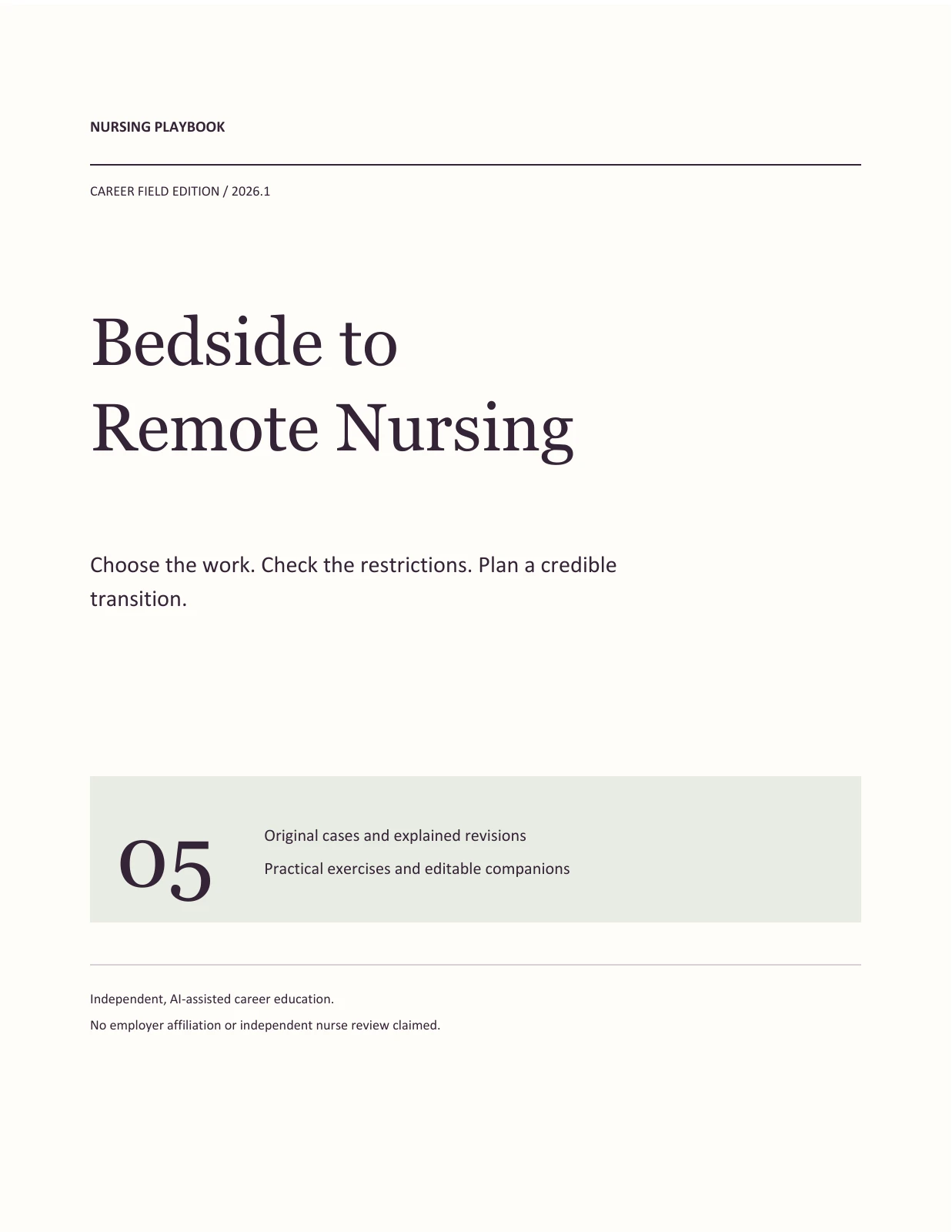
Complete the free worksheet with one current posting. If you want to turn the screen into a broader search, the Bedside to Remote Nursing preview introduces the wider process and its companions. The free screen is useful without purchasing anything.
If you need the wider process
Bedside to Remote Nursing
The playbook extends this first screen into an evidence map, a gap plan, interview preparation and offer comparison, with six editable companions.
17-page PDF · 5-page free preview · Edition 2026.1
$49 USD one-time price. See the product page for current availability.
The free worksheet above is useful on its own. The book is self-directed career preparation; it does not include a personal review or determine eligibility.